The Best Time to Visit Wayag Raja Ampat: An October-April Dry Season Guide
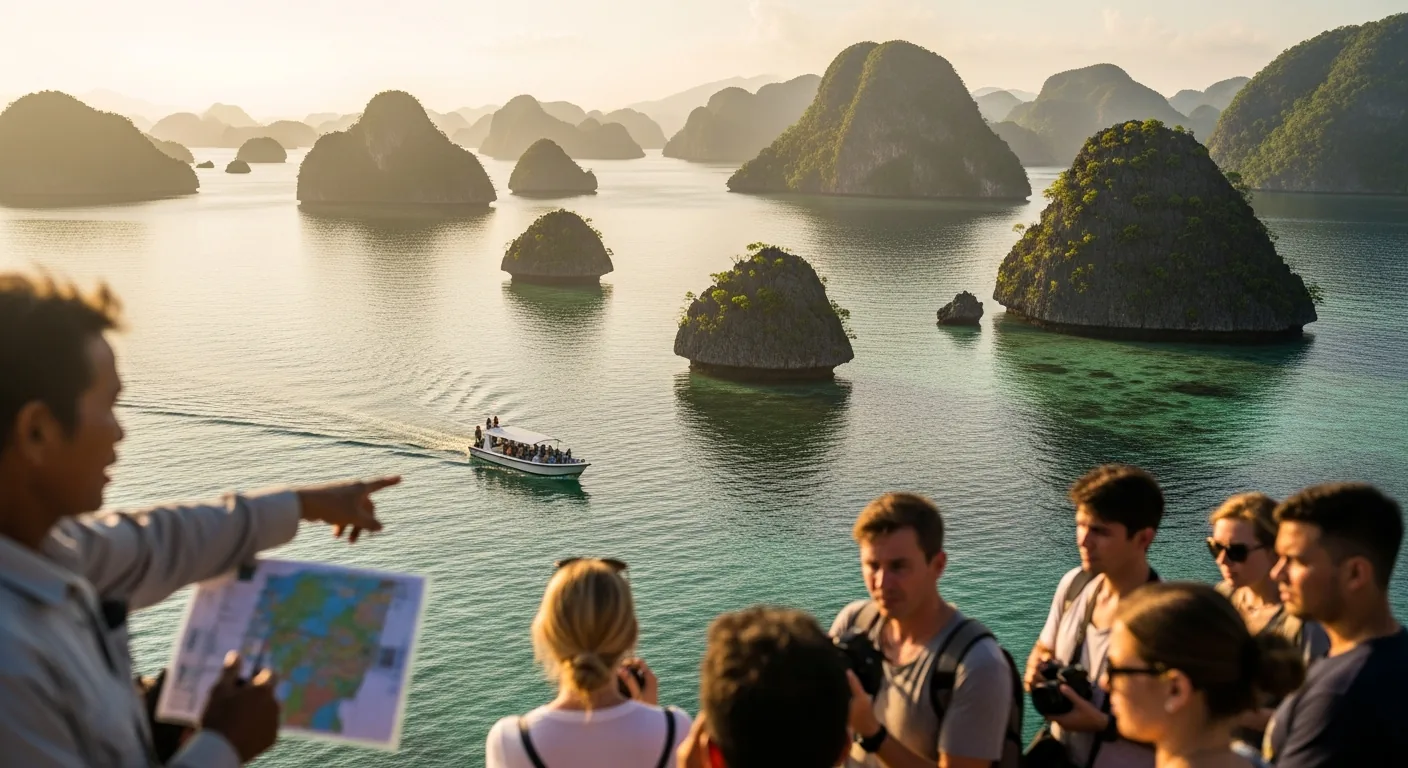
The speedboat slices through a placid, turquoise expanse. For three hours, the horizon has been a razor-sharp line dividing sapphire water and cerulean sky. Then, they appear. First as faint, serrated silhouettes, then resolving into the improbable limestone formations of Wayag. These are the icons of Raja Ampat, a fleet of karst islands draped in emerald vegetation, rising vertically from the sea. There is no grand arrival gate, only the quiet authority of a landscape that has remained unchanged for millennia. The air is heavy with salt and the scent of damp earth, a primal signal that you have reached one of the planet’s most biologically significant and geographically remote marine sanctuaries. See also: Contact.
Planning a visit to this archipelago, a constellation of over 1,500 islands off the coast of West Papua, is an exercise in logistical precision. The core challenge is not one of desire, but of timing. The open-sea crossing to Wayag is subject to the temperament of the Halmahera Sea, and a miscalculation can lead to a cancelled expedition or, at best, a compromised experience. For photographers seeking crystalline water and clear skies, and for travelers intent on making the precipitous climb to the celebrated Mount Pindito viewpoint, aligning your visit with the most favorable weather window is the single most critical decision. This guide deconstructs the nuances of Raja Ampat’s dry season, from October to April, to ensure your investment in time and resources yields the experience Wayag promises. See also: Home pricing.
Understanding Wayag’s Microclimate: Beyond the Monsoon Calendar
Raja Ampat’s location, squarely on the equator, dictates a tropical climate without the severe seasonal shifts of higher latitudes. The region operates on a binary system of wet and dry seasons, but local topography and ocean currents create significant microclimates. Wayag, situated in the far north of the regency, is particularly exposed. The primary dry season, running from October through April, is characterized by lower precipitation and, crucially, calmer sea states. This is the period when the prevailing winds are more predictable, making the 150-kilometer journey from Waisai not just possible, but pleasant. See also: explore Wayag Snorkeling Spots.
According to Dr. Arnaz Mehta, a climatologist who has spent a decade studying the Coral Triangle, “While Sorong on the mainland may experience rainfall, the offshore islands like Wayag can have entirely different conditions. The October-to-April window correlates with a period of reduced influence from the northwest monsoon. This typically translates to sea states between 0 and 2 on the Beaufort scale—calm to smooth—which is essential for safe passage in a speedboat.” During these months, average rainfall can drop to below 200mm, a stark contrast to the 400mm+ averages seen from May to September. Water temperatures remain a consistent 28-30°C (82-86°F) year-round, but it is the surface condition of the water that dictates the feasibility of any well-planned wayag tour.
This period offers the highest probability for the conditions that define the classic Wayag experience: glassy water reflecting the karst pinnacles, exceptional underwater visibility often exceeding 30 meters, and safe access to the trail leading to the Mount Pindito Wayag viewpoint. Attempting the journey outside this window is a gamble against unpredictable swells and squalls that can materialize with little warning.
The Peak Season: Navigating October to December
The months of October, November, and December represent the absolute peak for visiting Wayag. This period marks the beginning of the dry season, when the transition from the monsoon is complete and the seas are often at their calmest. For photographers, these months offer a compelling combination of placid waters for sharp reflections and a verdant landscape, freshly nourished by the preceding wet season. The clarity of the light in the morning and late afternoon is particularly well-suited for capturing the dramatic relief of the karst topography from the wayag viewpoint.
This optimal window, however, comes with increased demand. Liveaboards, which often include Wayag in their northern itineraries, are frequently booked 12 to 18 months in advance, with rates for a 7-night expedition starting around $4,500 USD per person. For those basing themselves in Waisai, securing a reliable wayag speedboat charter requires foresight. The cost for a private day charter to Wayag from the port of Waisai typically ranges from $1,500 to $2,000 USD, accommodating up to 8-10 passengers. During these peak months, availability can be limited, and booking at least three months prior is advisable.
The primary advantage of this period is predictability. The climb to the Mount Pindito Wayag viewpoint, a steep 25 to 40-minute ascent over sharp limestone and roots, is significantly safer when the path is dry. The panoramic reward from the summit—a 360-degree vista of the lagoon and its surrounding mushroom-shaped islands—is best appreciated under clear blue skies, a hallmark of this season. This is the time to go if your tolerance for weather-related risk is low and you are prepared for the premium on pricing and availability.
The Shoulder Season Advantage: January to April
For many seasoned travelers, the period from January to April offers a more balanced proposition. The excellent weather patterns of the early dry season largely continue, but the crowds and peak holiday pricing recede after the New Year. The seas remain predominantly calm, and the conditions for photography and trekking are nearly identical to the preceding months. Alex Dawson, a professional photographer who has led workshops in Raja Ampat for eight years, prefers this window. “February and March are my preferred months for a wayag tour,” he notes. “The visitor numbers at the wayag viewpoint are lower, allowing for more time and space to work. The sun’s angle is also favorable, and you can often have the entire lagoon to yourself for periods in the afternoon.”
This shoulder season also aligns with strong marine life activity. While Wayag’s primary draw is its topography, the surrounding reefs are vibrant. Manta ray sightings at nearby cleaning stations like Manta Sandy, while possible year-round, remain frequent during these months. A private wayag speedboat charter offers the flexibility to combine the climb up Mount Pindito with snorkeling or diving stops tailored to your interests. The logistics remain the same—a pre-dawn departure from Waisai after taking the 2-hour ferry from Sorong—but the experience on the ground can feel more exclusive.
- Reduced Crowds: Post-holiday lull means fewer boats at the main anchorage and less traffic on the trail to the Mount Pindito viewpoint.
- Excellent Conditions: Weather and sea states are still highly favorable, with minimal difference from the October-December peak.
- Greater Availability: Securing a high-quality speedboat charter or accommodation in Waisai is generally easier and can sometimes be done with less advance notice.
- Sustained Marine Activity: Ideal conditions for snorkeling in Wayag’s lagoons and observing marine megafauna throughout the northern Raja Ampat region.
A Comparative Analysis: Choosing Your Ideal Month
To assist in your planning, this table provides a month-by-month comparison of key factors for a Wayag expedition during the optimal dry season. The price index is relative, with 100 representing peak season pricing for charters and services. Visibility is an average estimate for snorkeling and diving within the Wayag lagoon system. See also: Wayag Raja Ampat Tours About.
| Month | Sea Conditions | Water Visibility | Crowd Level | Price Index | Key Wildlife |
|---|---|---|---|---|---|
| October | Calm | Excellent (30m+) | Moderate to High | 95 | Reef sharks, Manta rays |
| November | Very Calm | Excellent (30m+) | High | 100 | Reef sharks, Wobbegong |
| December | Very Calm | Excellent (30m+) | Very High (Holidays) | 100 | Reef sharks, Turtles |
| January | Calm | Very Good (25-30m) | Moderate | 90 | Manta rays, Reef sharks |
| February | Calm | Very Good (25-30m) | Low to Moderate | 85 | Manta rays, Eagle rays |
| March | Calm to Slight Chop | Good (20-25m) | Low to Moderate | 85 | Reef sharks, Bumphead parrotfish |
| April | Calm to Slight Chop | Good (20-25m) | Moderate (Easter) | 90 | Manta rays, Reef sharks |
Logistical Imperatives: Securing Your Wayag Speedboat and Permits
Accessing Wayag independently is not feasible. The journey requires a dedicated wayag speedboat charter with an experienced crew. These charters are almost exclusively based out of Waisai, the capital of the Raja Ampat Regency on the island of Waigeo. The gateway to the region is the airport in Sorong (SOQ), from which a scheduled 2-hour fast ferry departs for Waisai, typically at 9:00 AM and 2:00 PM. A successful wayag tour begins with this crucial logistical chain.
Before any travel within the park, all visitors must purchase a Raja Ampat Marine Park Entry Permit, known locally as a PIN. The cost for international visitors is IDR 1,000,000 (approximately $70 USD) and is valid for 12 months. This can be purchased at the official office in Waisai. Reputable charter operators like Wayag Raja Ampat Tours will often facilitate this process for you. The charter fee itself is the most significant cost, but it covers the boat, a captain and crew familiar with the hazardous reefs, fuel for the 300km round trip, and often includes a packed lunch and snorkeling equipment. A well-organized charter is the foundation of a successful expedition to the Mount Pindito Wayag viewpoint.
A typical day trip itinerary looks as follows:
- 06:00: Departure from the harbor in Waisai to capitalize on calm morning seas.
- 09:30: Arrive at the Wayag ranger post to present permits and log your visit.
- 10:00: Begin the ascent to the primary wayag viewpoint on Mount Pindito.
- 12:30: Lunch on a secluded beach within the Wayag lagoon.
- 14:00: Snorkel among the juvenile blacktip reef sharks at the conservation nursery near the ranger post.
- 15:00: Begin the 3-4 hour return journey to Waisai, arriving before dusk.
Beyond the Viewpoint: What to Expect from a Wayag Tour
While the panoramic photograph from the wayag viewpoint is the coveted prize, the experience of a full-day wayag tour encompasses much more. The true character of the islands is revealed at sea level. Navigating through the narrow channels between the towering karsts in a wayag speedboat offers a profound sense of scale and discovery. Your crew will identify hidden passages and coves inaccessible to larger vessels, leading to pristine beaches where the only footprints will be your own.
The water inside the main lagoon is a protected, placid environment, perfect for snorkeling. The coral gardens here are resilient and healthy, supporting a dense population of reef fish. The visit to the ranger station often includes a stop at the adjacent bay, which serves as a natural nursery for blacktip reef sharks. Observing dozens of these juvenile predators patrol the shallows is a compelling reminder of the area’s ecological vitality. A properly executed expedition is not a singular mission to climb Mount Pindito Wayag; it is a comprehensive immersion into a unique and fragile marine ecosystem. Choosing an operator with deep local knowledge ensures you experience these subtle, yet profound, dimensions of Wayag.
Your Wayag Expedition: A Checklist for Success
The difference between a flawless expedition and a frustrating one lies in diligent preparation. Wayag’s remoteness demands it. Whether you favor the absolute calm of November or the quiet solitude of February, the principles of planning remain the same. The October to April dry season provides the canvas; your preparation provides the details.
To ensure your visit is seamless, consider the following actions:
- Select Your Travel Window: Use the comparative data to choose between the peak season (Oct-Dec) for guaranteed conditions or the shoulder season (Jan-Apr) for a balance of excellent weather and fewer visitors.
- Engage a Specialist: Contact a reputable operator to discuss a private wayag speedboat charter. This is the most critical logistical step. A professional service will handle permits, itinerary, and safety.
- Book Core Transport: Secure your flights into Sorong (SOQ) and be aware of the ferry schedule to Waisai. It is advisable to arrive in Waisai at least one day prior to your planned Wayag tour.
- Prepare for the Environment: Pack lightweight, quick-drying clothing, high-SPF reef-safe sunscreen, a wide-brimmed hat, and sturdy, closed-toe footwear suitable for the sharp limestone trail to the wayag viewpoint.
To arrange a private charter that aligns with the optimal sea conditions and your specific photographic or travel interests, contact our specialists. We provide professionally crewed speedboats, manage all necessary permits, and curate itineraries that reveal the full scope of the Wayag island group.
Wayag Raja Ampat Tours
Phone: +62 811-3941-4563
Email: bd@juaraholding.com
Office: Jalan Sunset Road No. 88, Kuta, Badung, Bali 80361